On Wednesday we observed the third anniversary of the October 7th attacks on southern Israel that resulted in over 1,200 people’s deaths and over 250 individuals taken hostage by the terror group Hamas. As we reflected on the lives lost, the lives forever changed, and the ways October 7 continues to shape our community, we asked three professionals from the Montclair Campus to share their reflections. Each works within a Jewish communal organization, but they bring different personal and professional perspectives to their work.
Hadas Levine, Director of Israel & Overseas at the Birmingham Jewish Federation
Zoe Weil, Director of Jewish Life at the Levite Jewish Community Center
Brian Cain, Head of School at N.E. Miles Jewish Day School
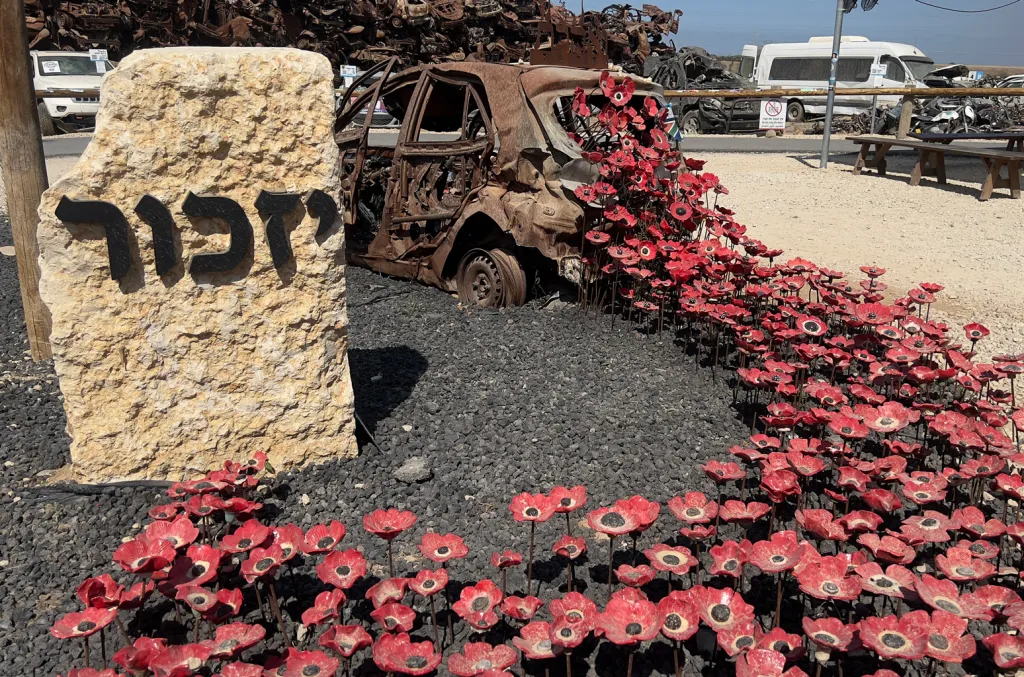
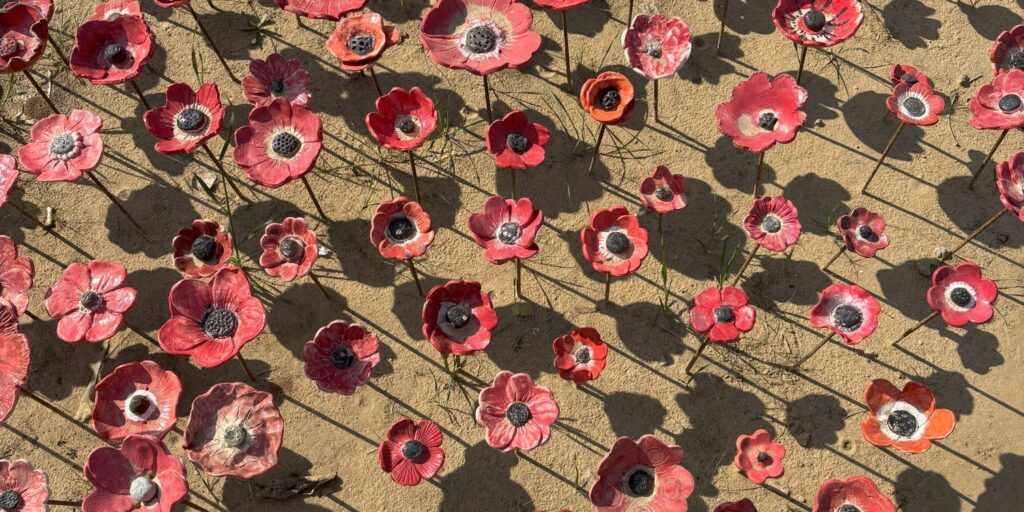
Israel’s national flower, the kalanit, is a symbol of hope, resilience, and rebirth. Every spring the flower blooms along the Negev Desert, symbolizing life’s ability to thrive in harsh conditions. Since October 7, the kalanit took on a deeper meaning of grief, solidarity, and endurance with many Israeli artists using the flower to process their collective trauma.
When reports and alerts first began to circulate after the October 7th attacks, where were you physically, and what was the immediate internal reaction before you even had full details?
Hadas: It was late at night, and I was at home when I first started receiving messages from a friend in Israel telling me that there were sirens going off and that a large number of rockets were being fired. I immediately turned on the Israeli television stations and started following social media. I was watching what was happening in real time, just as people in Israel were.
At first, I honestly could not understand what I was seeing or hearing. I kept thinking, “Is this really happening?” As more reports started coming in, it became harder and harder to comprehend the magnitude of what was happening. I remember feeling disbelief, followed by shock, fear, and so much worry.
There was also a feeling that something had changed, even before we knew exactly what had happened. You could feel that this was different and that life was not going to be the same. I don’t think any of us could have imagined just how much October 7th would change our lives and our community.
Zoe: I was out of town, vacationing at a lake house. On October 8th, the morning I was headed home, I started scrolling through Instagram and saw some reports of attacks on Israel. Unfortunately, it wasn’t too uncommon to hear about rockets launching into Israel, so I wasn’t immediately shocked. It’s when I started to see some of the horrible, graphic videos of what was happening on the ground that I realized this was something unprecedented. I remember this moment in a really similar way that I remember where I was on 9/11.
Brian: I had to look up the exact time because all I remember was what we need to do to protect our students and staff. I got to work very early and we walked the perimeter on that Sunday morning. We had local police there. I didn’t know all of the details but a few of my Jewish Day School friends called me and helped me realize what was happening in Israel. I have had a ton of safety training because the violence in schools has escalated so much in the last 30 years that I met with the staff and helped us think and plan. Everyone was nervous, me included, but the staff was brave and the kids were brave too.
In what ways did your role, daily focus, or sense of purpose within the community transform during that critical first week?
Hadas: In that first week, I felt extra fortunate to work at the Birmingham Jewish Federation. There truly is no other place I would have wanted to be during that time. Israel immediately became the priority for the Birmingham Jewish Federation and for our entire community and we did everything we were able to do to support Israel and the Israelis.
For me personally, it felt very different from my normal day-to-day work. There was an urgency and a sense of purpose that I had never experienced before. We weren’t just talking about what was happening. We were asking ourselves, “What can we do? How can we help? How can we make a difference?”
But what touched me most personally was watching our Jewish leadership, Jewish organizations, and the entire Birmingham community come together. People didn’t just want to hear about what was happening in Israel. They wanted to act. They wanted to donate, volunteer, pray, reach out, and do something meaningful.
Zoe: I was sort of thrown into the Jewish community that week. In the weeks leading up to October 7, I had been in conversations with Brooke at The J about doing some very part-time consulting work related to historic synagogues. Then, on October 8, she called and asked if I could start full-time on October 9, at a moment when none of us really knew what The J and our community would need in the days ahead.
I had already been part of the Birmingham Jewish community. I had married into an amazing Jewish-Birmingham family and had existing connections to the community, but October 7 changed my relationship to that community in a profound way. Starting at The J in the immediate aftermath meant stepping into a moment of uncertainty and need. I went from being connected to the community to becoming an active contributor to it. Looking back, that first week was when my sense of purpose within the community really started to take shape. I wasn’t just observing/participating in Jewish communal life anymore: I was helping to build/sustain it.
Brian: We immediately hired a school resource officer which was not in our budget, but our board was determined to keep us safe. The most important role of any school is not instruction-that is second. The most important thing we do in school is keep kids and staff safe and we doubled down on that and still do.
How has October 7 changed you personally?
Hadas: I don’t think I fully know yet how October 7th has changed me. Maybe I won’t understand the full impact for a long time. But if there is one thing I carry with me, it is Am Yisrael Chai, the people of Israel live. Those words mean more to me now than they ever did before.
I remember one of the first Zoom calls with the Jewish Federations of North America on October 8th. Eric Fingerhut, President and CEO of JFNA, said something that has stayed with me. He acknowledged that we all had questions, that this was going to be an incredibly difficult time, but that regardless of those questions, our role was to support Israel.
That really resonated with me. We can have questions. We can struggle with what we are seeing and hearing. We can feel overwhelmed, angry, frightened, and uncertain. But at the same time, we can still stand with the people of Israel and show up for our community.
I think that is what October 7th has changed most for me: a deeper sense of responsibility and a deeper understanding of what it means to show up. It has reminded me that being part of the Jewish people is not just about celebrating together in good times. It is about standing together, especially when things are difficult.
As painful and difficult as these years have been, I continue to believe deeply in the strength of our people, the importance of community, and our responsibility to one another. And more than ever, I believe in Am Yisrael Chai.
Zoe: Since October 7, I’m putting up a sukkah in my yard, buying more Israeli and Jewish art, reading Jewish holiday books with my girls, learning Hebrew, staying connected to my Israeli friends, and making more meaningful friendships within our community. I feel so moved to bring Jewish joy into my family and my life in response to the horrific attacks and the historic rise in antisemitism. I tend to get a little fatalistic when I spend too much time on social media, taking in the amount of hatred directed at Israelis and Jews. So, rather than sitting in that grief, I try to focus on the positive things I can do to show up for Am Yisrael.
Brian: I am very sad that there is still this much hate in the world that attacks like that happen. I am angered by the rise in antisemitism across the country and concerned that leaders in state and national government aren’t doing more. I love the quote below and believe in it: “The only thing necessary for evil to triumph is for good people to do nothing.”