While many of our members are Jewish, many are not. Regardless of where you fall, we’ve put together this brief guide to the upcoming “High Holidays” season — so-called due to their importance in the Jewish calendar.*
- Sept. 4, Staff Appreciation Day: facility closed
- Sept. 7, closing at 6 p.m. for Labor Day (offices closed all day)
- Sept. 12, Rosh Hashanah | Jewish New Year: facility closed
- Sept. 13, Rosh Hashanah: facility closed
- Sept. 21, Yom Kippur | Day of Atonement: facility closed
- Sept. 26, Sukkot | Feast of Booths: facility closed
- Oct. 3, Shemini Atzeret (concluding day of Sukkot): facility closed
Rosh Hashanah
- Begins at sunset on September 11 and ends at nightfall on September 13
- The new year will be 5787 in the “lunisolar” Jewish calendar
- Greeting: L’Shana Tova U’Metoka (le-shahna tow-VAH oo-meh-TOH-kah) or to a good and sweet new year
- The J will be closed September 12-13
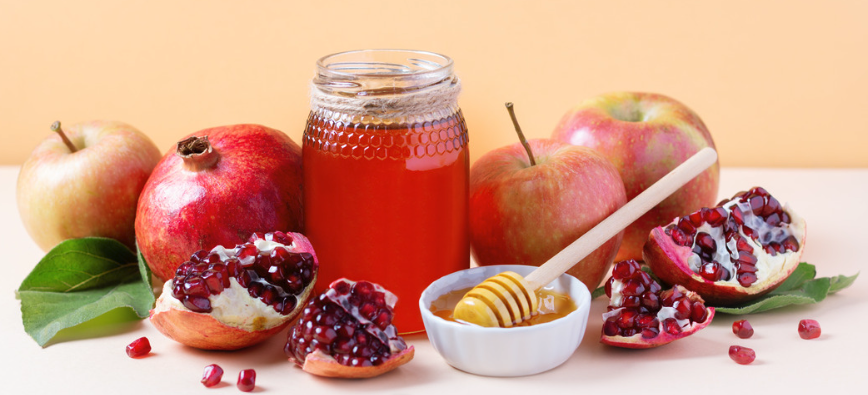
The Jewish New Year is marked by celebration and introspection as people reflect on the past year. Foods traditionally associated with the holiday include apples, honey, and pomegranates (hence the “sweet year”), plus round loaves of challah that symbolize the eternal cycle of life.
The holiday also includes blowing a shofar, or ram’s horn, as a symbolic “wake-up call” to repent.
Yom Kippur
- Begins at sunset on September 20 and ends at nightfall on September 21
- Greeting: Tzohm kal (tzohm KAHL) or may you have an easy fast; also g’mar chatima tova (ge-MAR chah-tee-MAH tow-VAH), or may you be inscribed for a good life
- The J will close for the day on September 21
The most solemn day in the Jewish calendar, Yom Kippur, also known as the Day of Atonement, focuses on repentance. Fasting is one way that many Jews choose to temporarily separate themselves from the routines of daily life.
Sukkot
- Begins at sunset on September 25 and ends at nightfall on October 2
- Greeting: Chag sameach (khahg sah-MAY-ahkh) or happy holiday
- The J will close September 26
Also known as the Harvest Festival, Sukkot is named after the temporary sukkot, or booths (singular: sukkah), that people build in their yards for the week-long celebration. The structures represent the flimsy dwellings that Jews used after escaping slavery in Egypt. They must have at least three sides with a roof made of thatch or branches, and the tradition is to spend as much time in them as possible (for meals, reading, and even sleeping, for example).
Shemini Atzeret and Simchat Torah
- Begins at sunset on October 2 and ends at nightfall on October 3
- Greeting: Chag sameach (khahg sah-MAY-ahkh) or happy holiday
- The J will close October 3
Considered to be both the eighth day of Sukkot and also an independent holiday, Shemini Atzeret includes reciting Yizkor — the memorial prayer for the departed. Observance of Simchat Torah on the following day, meanwhile, ends the annual Torah reading cycle before immediately beginning the new one. Both days include festive meals.
Learn more
Visit our page that’s devoted to Jewish holidays to learn more about these and other holidays (and be sure to catch the Lego Sukkot video!).
*Technically speaking, only Rosh Hashanah and Yom Kippur are considered “High Holidays,” but we’ve combined them all here for the purposes of this seasonal guide.