Leadership at J Camp extends far beyond leading songs, helping younger campers, or organizing games. This summer, members of the J Camp Counselors in Training (CIT) Program are gaining a deeper understanding of what it means to serve their community through a new partnership with Grace Klein Community’s FeedBHM Hub and Community Outreach Hall.
The initiative grew out of participation in the Jewish Community Center Association’s Tzedek Cohort, a program for JCC professionals focused on Jewish service learning that included a week-long gathering in New York City. Chief Programs Officer Barbara Traweek and Youth and Camps Director Noah Adams worked alongside colleagues from JCCs across North America to develop a meaningful service-learning project for The J.
Flower power
The project launched last week, when CITs accompanied Barbara to Grace Klein Community, where they transformed flowers donated byTrader Joe’s into arrangements for homebound individuals and families experiencing food insecurity. Some bouquets were delivered alongside meals while others were available to clients visiting the FeedBHM Hub. The CITs revisited Grace Klein this week.
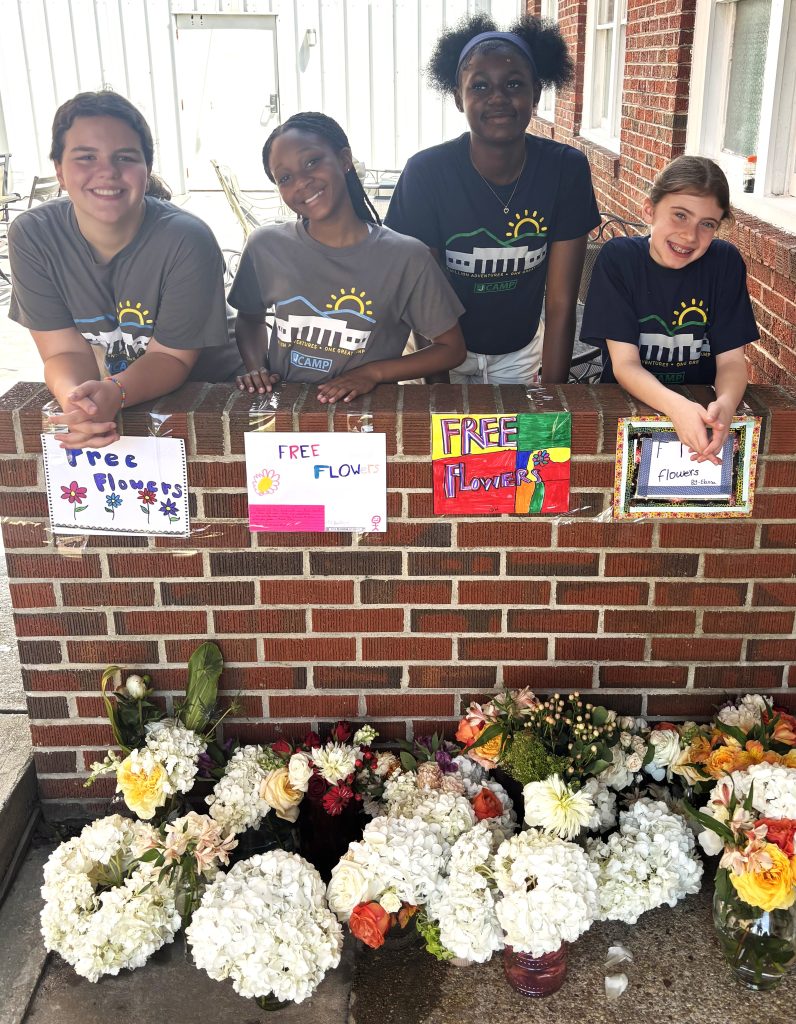
In addition to volunteering, the students learned about Grace Klein Community’s mission and its efforts to provide food assistance to approximately 22,000 people and families each week. They also discussed how small touches — such as fresh flowers and thoughtful food presentation — help preserve the dignity of those receiving assistance.
“One of the most powerful lessons our CITs are learning is that service isn’t just about meeting physical needs,” Barbara says. “It’s also about recognizing the inherent dignity of every person. Something as simple as a bouquet of flowers can communicate that someone is seen, valued, and cared for.”
The experience ties directly to the Jewish value of kavod ha’briyot, or respect for the dignity of all people.
“Our hope is that these experiences help our CITs see leadership through a different lens,” Barbara adds. “Leadership means showing up for others, listening to their needs, and taking action to strengthen our community. These young people are learning that they have the ability to make a meaningful difference right now.”