
By Zachary Dembo
In 2015, the Birmingham Jewish Federation and Birmingham Jewish Foundation sponsored a study decided it was time to take a close look at the Jewish population across the greater Birmingham area. They brought in Parker Consulting to conduct an extensive demographic study. Using information gathered from just about every Jewish religious and community organization in town, the researchers estimated that some 6,300 Jewish residents lived in about 2,600 households — about a thousand more residents than anyone had previously estimated.
The second part of the study involved sending questionnaires to a sample of those households. About 450 families responded, providing researchers with helpful information about demographics, Jewish identity, and how people participate in community life. The results gave local organizations a clearer picture of who Birmingham’s Jewish community really is and how best to serve it.
As an amateur historian, I too was pretty interested in the results. One set of findings in particular jumped out at me for how clearly it mapped onto historical patterns, specifically where Birmingham’s Jewish residents originally came from.
Looking at Birmingham as a whole, most people here are pretty rooted. The vast majority of the general population of the Magic City, around 80 percent, are lifelong Alabamians. But that pattern doesn’t quite hold for the Jewish community.
According to the study, only about 21 percent of Jewish households were led by folks who grew up in Birmingham their whole lives. Another 18 percent were native Alabamians who had moved away for a while before returning home. The rest, about 60 percent, came from somewhere else entirely — either another state or another country.
A mobile population
At first glance that might seem a little surprising. But truth be told, that kind of movement has been part of Birmingham’s Jewish story since the very beginning.
The city itself was founded toward the tail-end of the German Jewish immigration wave between 1820 and 1880, and then it really took off during the much larger wave of Eastern European Jewish immigration from 1880 to 1924.
Many of those earlier German Jewish immigrants already had business experience, connections, and a little capital to work with. When Birmingham started booming as a brand-new industrial city, they saw opportunity and headed this way in growing numbers. Others, especially Jews who already had roots in the South (whether by birth or through Civil War-era connections), were sometimes supported by established Jewish firms to help open new markets in the growing city.
Those early settlers laid the groundwork by building congregations, businesses, and institutions. These endeavors later helped support the arrival of Eastern European Jews as the Jewish population of the United States grew from about 250,000 people in 1870 to more than four million by the late 1920s.
So when you look at the big picture, it really isn’t all that surprising that the Jews who helped build Birmingham came from all over. In fact, while we don’t know the exact statistics, it would be safe to assume that, given broader migration patterns from Europe to American port cities and then outward to places of opportunity across the country, the Jews of Birmingham were mostly European immigrants and/or the American-born children of immigrants until the latter half of the 20th century. With each additional wave of migration — Greek, Soviet, and Israeli — the community became even more geographically diverse.
An international community
Turning back to the Magic City, it’s important to note that Birmingham itself was never nearly as diverse as its Jewish community. While any new industrial city might attract people from abroad, even at its height around 1890, immigrants made up only about 13.4 percent of the city’s total population, or roughly 23.5 percent of the white population. By 1910, that number had dropped to around 10 percent.
Birmingham’s industrial boom certainly pulled in workers from other parts of the country as well as from overseas. But immigrant groups here never shaped culture and politics the way they did in big northern cities like Chicago, Detroit, New York, Cincinnati, or St. Louis. Simply put, there just weren’t as many of them here.
Moving within Alabama
The study also uncovered another interesting detail: about 18 percent of respondents originally came from somewhere else in Alabama.
And that also turns out to have deep historical roots.
While we don’t have exact numbers from the 19th century, there’s plenty of evidence that many of Birmingham’s earliest Jewish residents weren’t brand-new arrivals to the state. Instead, they had already been living in smaller Alabama towns and chose to move to Birmingham once the new city started offering greater economic and communal opportunities.
Take the very first Jews known to have settled here. Two of the first three were already living elsewhere in Alabama when Birmingham was founded.
Men’s clothing salesman Henry Simon and his family came from Selma. Samuel Marx, a Bavarian Jew, moved from Montgomery to Elyton after his business failed, before ultimately settling in Birmingham, where he found considerable success.
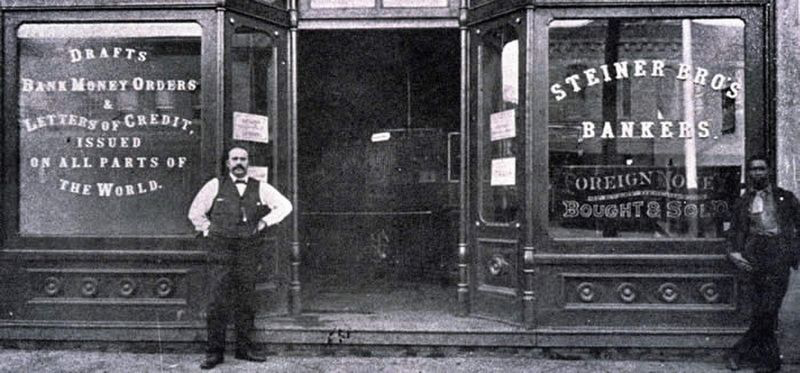
Moses V. Joseph of the famous Loveman, Joseph and Loeb store was born in Greensboro, Alabama, and also spent time in Selma before relocating to Birmingham. A. B. Loveman himself came out of Greensboro before establishing his business in the Magic City. The Austrian Steiner brothers, Burghard and Sigfried, proprietors of Steiner Brothers Bank and key figures in helping stabilize the city during the Panic of 1893, came from Uniontown.
Others had already been living elsewhere in the South before finding their way to Birmingham. Samuel Ullman and Mayer Benjamin Mayer, a newspaperman, arrived from Natchez. Simon Klotz, a French Jew and president of the Young Men’s Hebrew Association of Birmingham, moved here from Klotzville, Louisiana. Emil Lesser, a newspaper publisher, restaurateur, hotelier, and developer, came to the city from Galveston, Texas. Morris Adler was born in Jonesborough and, after spending time in Baltimore, also made his home in Birmingham.
The lingering question
This fact leaves us with a bit of a conundrum. In our quest to establish why there are Jews in Birmingham, Alabama, we have determined that first, it was because they could; second, because they had to leave Europe; and third, because there were enough Jews in the country at the birth of the city to support a community and, in later years, sustain it. What we haven’t explained is why Jews traveled so far from the coastal cities and into the hinterlands of the Deep South.
The fact that Jews were already in Alabama and other seemingly unlikely places in the South requires us to take a closer look not just at how our ancestors got to these places, but why they went.
Far-right photo of synagogue in top banner courtesy Birmingham, Ala. Public Library Archives.
References
- Armbrester, Margaret E. Samuel Ullman and “Youth”: The Life, the Legacy. University of Alabama Press, 2008.
- Cohen, Michael R. Cotton Capitalists: American Jewish Entrepreneurship in the Reconstruction Era. New York University Press, 2017.
- Elovitz, Mark H. A Century of Jewish Life in Dixie: The Birmingham Experience. University of Alabama Press, 1974.
- Harris, Carl V. Political Power in Birmingham: 1871–1921. University of Tennessee Press, 1977.
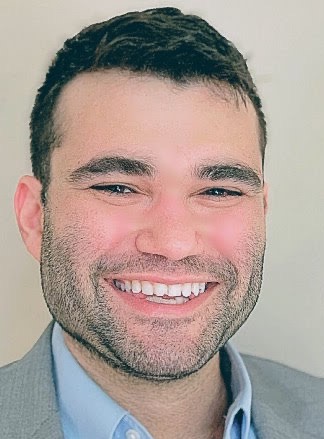
Zachary Dembo is a Licensed Professional Counselor and Southern Jewish history nerd from Baltimore, Maryland — the Birthplace of the Star-Spangled-Banner. His first of many visits to Birmingham began in 2008 and he became a resident in 2019. He is married to Lauren Axelroth, a third-generation Birminghamian.
In recognition of Zach’s historical writing for The J’s blog in 2024, in January he received the LJCC’s L’Dor V’Dor Award “for embodying The J’s core value of empowering others to learn and understand Jewish values, thereby ensuring a vibrant and meaningful Jewish future.”
Also by Zachary Dembo:
- Celebrating 250 years of American Jewish military service
- ‘More like brothers than friends’: Remembering WWII’s Jewish American war dead
- Touring Jewish B’ham with Milton: Part I, Part II
- ‘The Merchants’ make their mark
- Of secrets, omissions, and selective memory
- How the ‘German’ Jews got to Birmingham: Part 1
- ‘I understand freedom more than you’: German Jews in Birmingham
- Because we could: The history of Jews in Birmingham